
Alibaba MOQ Too High? How to Find Suppliers With Lower Minimum Orders in 2026
Have you found a product you want to sell, only to discover that the supplier requires hundreds or…

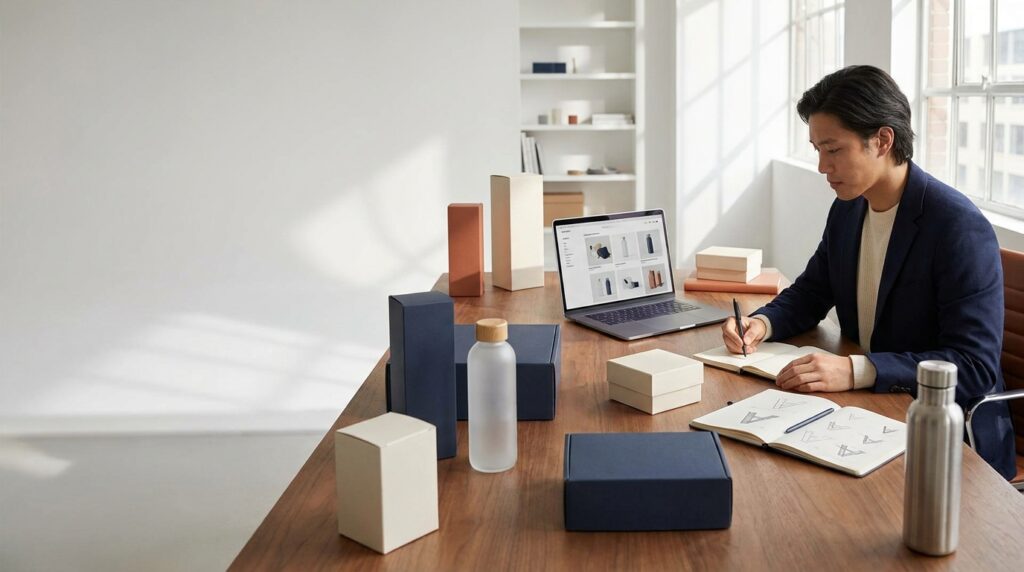
Have you ever wanted to sell a product under your own brand but worried about the cost of manufacturing, packaging, and ordering inventory?
You are not alone. New entrepreneurs often face the same challenge: how can you test a product idea without spending too much money before knowing whether customers want it?
Private labeling can be one option. It involves sourcing a product that a supplier makes or provides and selling it under your own brand, subject to the product, supplier agreement, and applicable legal requirements.
Alibaba.com lets buyers explore suppliers and ask about product specifications, packaging, customization, and order quantities. The key is to begin with a practical plan instead of committing to a large order too early.
Before selecting a product, identify the type of customer you want to serve.
For example, you might focus on home office organization, travel accessories, fitness accessories, or useful household products.
Avoid choosing a product just because it looks popular. Research customer reviews, competing offers, common complaints, and the prices buyers are prepared to pay.
A specific audience can help you build a more focused brand than trying to sell everything to everyone.
A complicated product may require more testing, technical specifications, certifications, tooling, or specialized packaging.
For a first project, consider investigating a relatively simple product with clear specifications and manageable sourcing requirements.
Examples include desk accessories, organizers, reusable bags, or selected non-electrical household accessories.
These are examples for research, not guaranteed profitable products. You still need to evaluate demand, competition, safety, quality, and applicable regulations.
A brand needs more than a logo.
Think about the product’s intended audience, design, packaging, instructions, quality standards, and customer experience.
Make sure your proposed differentiation is feasible and supported by the supplier’s actual capabilities.
Search Alibaba.com for your product category and compare relevant listings.
Contact several suppliers and explain that you are investigating a private label project. Ask which parts of the product can be customized and what each option costs.
Do not assume that every listing offers private labeling. Customization depends on the individual supplier and product.
The minimum order quantity, or MOQ, is the smallest quantity a supplier will accept under the stated terms.
A standard, unbranded product may have a different MOQ from the same product with custom packaging or printed logos.
If the initial quantity is too large for your budget, ask whether the supplier can offer an existing product with simpler packaging or a smaller sample order.
The lowest MOQ is not automatically the best option. Compare the unit cost, customization fees, shipping, quality, and future reorder conditions.
A product sample can help you evaluate the quality before committing to a larger quantity.
Inspect dimensions, materials, finish, packaging, and the details most important to your customer.
For customized products, ask how the final production run will match the approved sample and branding specifications.
Document any important requirements in the order. If the product belongs to a regulated category, check the relevant safety, testing, labeling, and compliance rules before selling it.
Your sourcing budget should cover more than product costs.
Calculate your approximate landed cost per unit and compare it with a realistic selling price.
For example, a $5 product does not create a $15 profit simply because you plan to sell it for $20. Shipping, taxes, payment fees, marketing, fulfilment, returns, and other costs can reduce the margin substantially.
Use actual supplier quotations when preparing your budget.
Before finalizing a brand name, search existing trademarks and investigate whether your chosen name or design could conflict with another business’s rights.
Do not ask a supplier to reproduce another company’s protected logo or branded design without authorization.
For customized manufacturing, document ownership and permitted use of your artwork, packaging designs, molds, or other relevant materials in the supplier agreement.
The legal requirements depend on the countries and product category involved, so seek qualified advice when necessary.
Once you have evaluated the sample, calculated costs, and confirmed the supplier’s terms, consider a manageable first order if the economics make sense.
Gather customer feedback and track sales, returns, reviews, and actual costs before placing a substantially larger order.
Early results can help you decide whether to improve the product, change packaging, adjust the price, or explore another supplier.
Alibaba.com enables buyers to discover products and communicate with suppliers about sourcing requirements.
Explore suppliers on Alibaba.com and ask about samples, minimum quantities, branding, packaging, and customization options for your chosen product.
Compare the responses before committing to inventory.
Potentially, but the required budget varies by product, MOQ, customization, logistics, testing, and marketing. Start by collecting actual quotations and calculating the full cost.
You can find suppliers and listings that may offer customization, but not every product or supplier supports private labeling. Confirm the available options directly.
There is no universal best MOQ. Choose a quantity that fits your budget, demand expectations, supplier terms, and the cost of producing each unit.
Not necessarily. Compare the value of custom packaging with its added cost and minimum order requirement. Standard packaging may be worth considering while you test demand.
Building a private label brand begins with customer research, careful product selection, supplier comparisons, and a realistic budget.
You do not need to make every branding decision at once. Investigate your options, request samples where appropriate, and confirm customization and order conditions before investing in inventory.
Ready to explore product ideas and suppliers? Visit Alibaba.com.
Affiliate disclosure: This article contains affiliate links. The publisher may earn a commission from qualifying purchases made through these links, at no additional cost to the buyer.
Some recommended offers are affiliate links — we may earn a commission at no cost to you. Learn more
Have you found a product you want to sell, only to discover that the supplier requires hundreds or…

Finding a promising product is exciting, but choosing the right supplier is just as important.Buyers may worry about…

Finding a product at a low wholesale price can feel like a great business opportunity. But what happens…
We detected a preferred language for your region/browser. You can translate the whole site now or keep English.